
The Silicon Valley Scoliosis Method
A completely new way of thinking about scoliosis treatment — built to prevent surgery, improve posture, reduce rib hump and rotation, and help the spine grow straighter during childhood development.
Jump to a Section
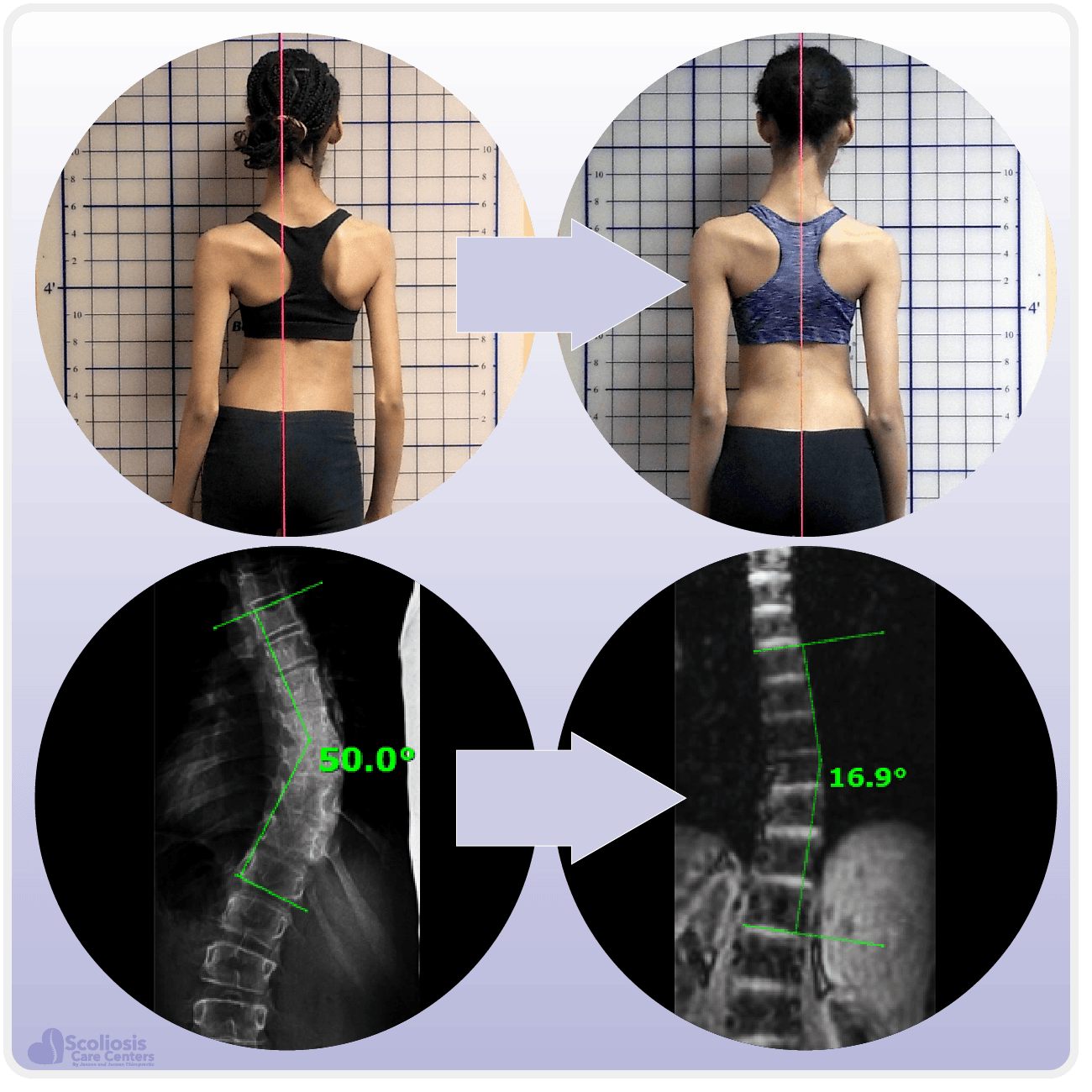
The Silicon Valley Scoliosis Method is a completely new way of thinking about scoliosis
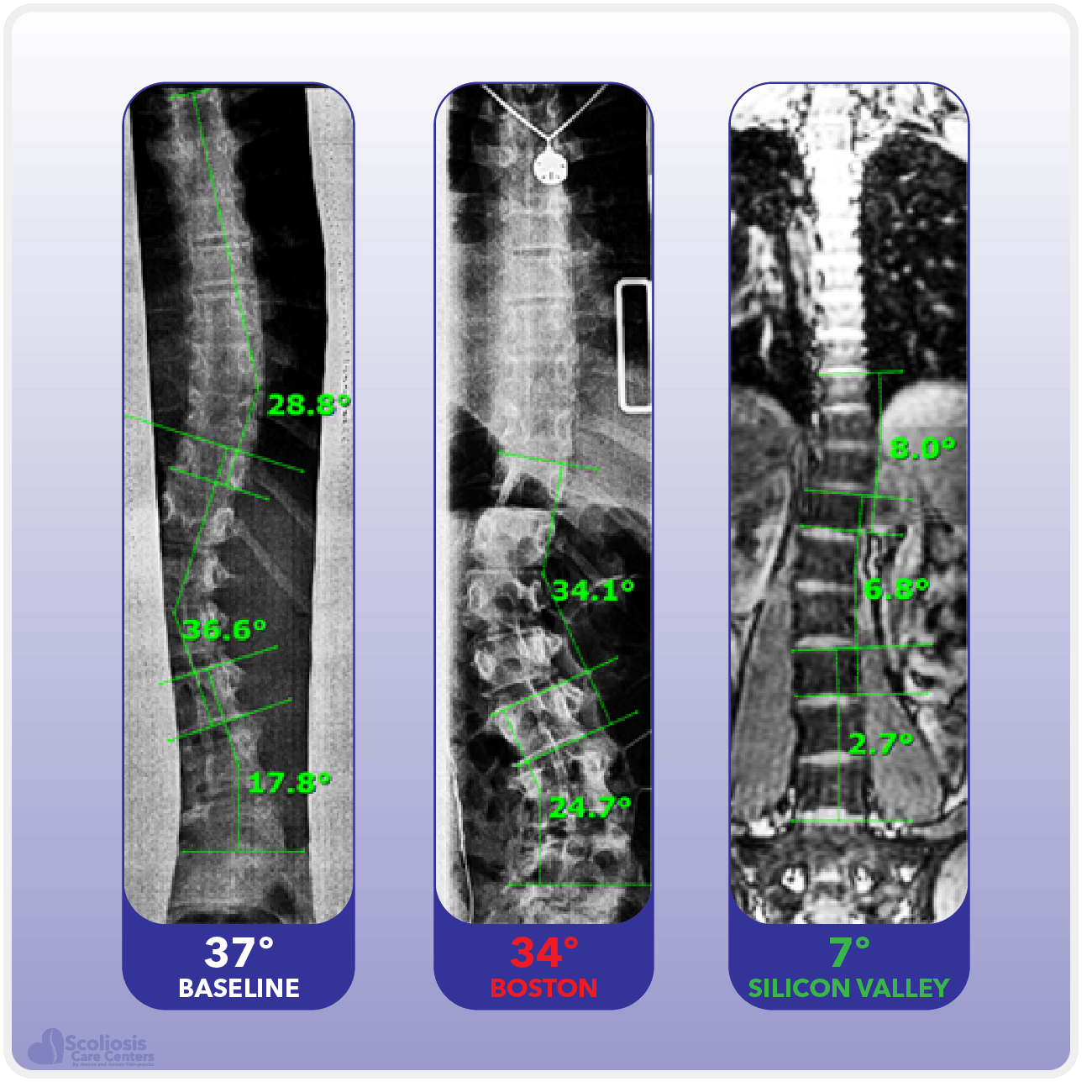
A young child with a 30 degree curve has a 95% chance of needing surgery by the time they grow up9. In contrast, the Silicon Valley Scoliosis Method has a 100% success rate for preventing surgery in curves 30 and under. Not only can it eliminate the need for surgery, it can make the spine grow straighter.
Don’t just prevent surgery for your child: redefine success and create your own scoliosis success story. The Silicon Valley Method helps you to:
- Prevent surgery
- Improve posture
- Reduce rib hump
- Reduce rotation
- Reduce curve size (Cobb angle)
Supported by scientific and medical literature, the Silicon Valley Scoliosis Method gives you every tool you need to achieve these ambitious goals.
Learn How We Achieve Our Amazing Results
This page is your hub for the 5 parts of the Silicon Valley Scoliosis Method. Each part below links to a deeper page explaining the science, purpose, and role it plays in non-surgical scoliosis treatment.
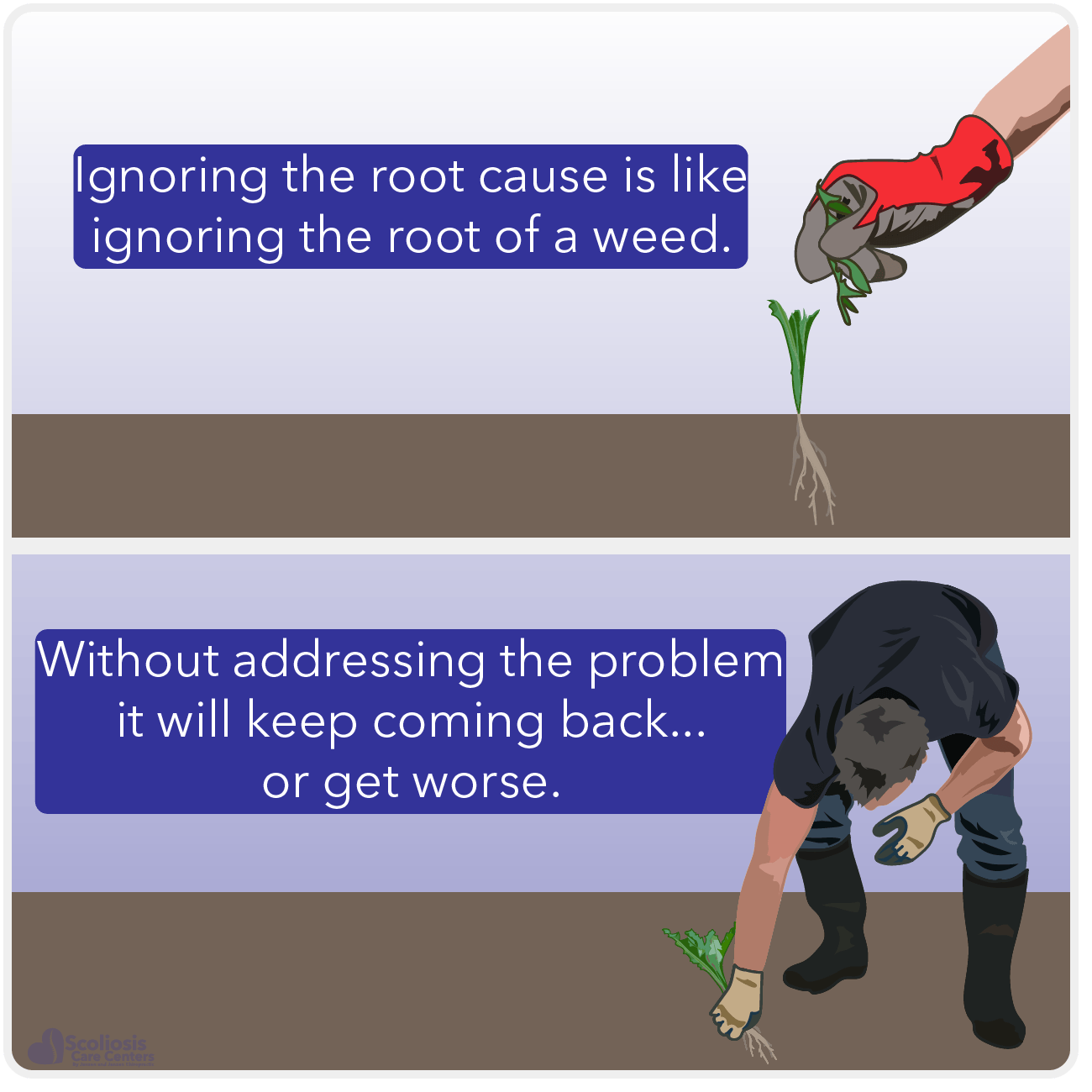
Treat the Root Cause
Most scoliosis is labeled idiopathic, which means the cause is treated like it can never be known. This leaves the driving force of progression unchecked as the curve worsens with growth.
Release Contractures
Contractures are stiff tissues that limit movement and correction. By addressing them non-surgically, the spine is no longer as “stuck” in its curved position.
Bracing Reinvented
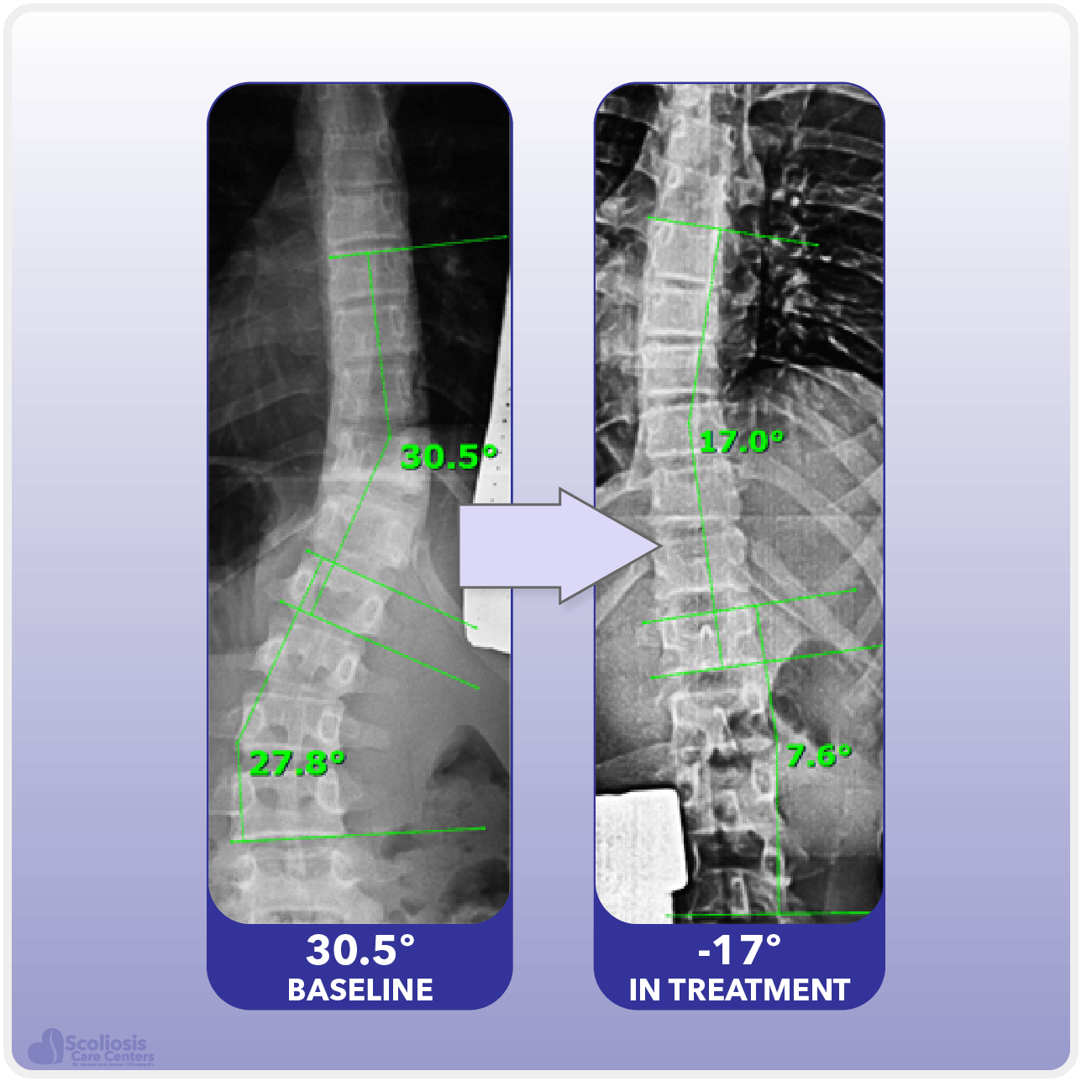
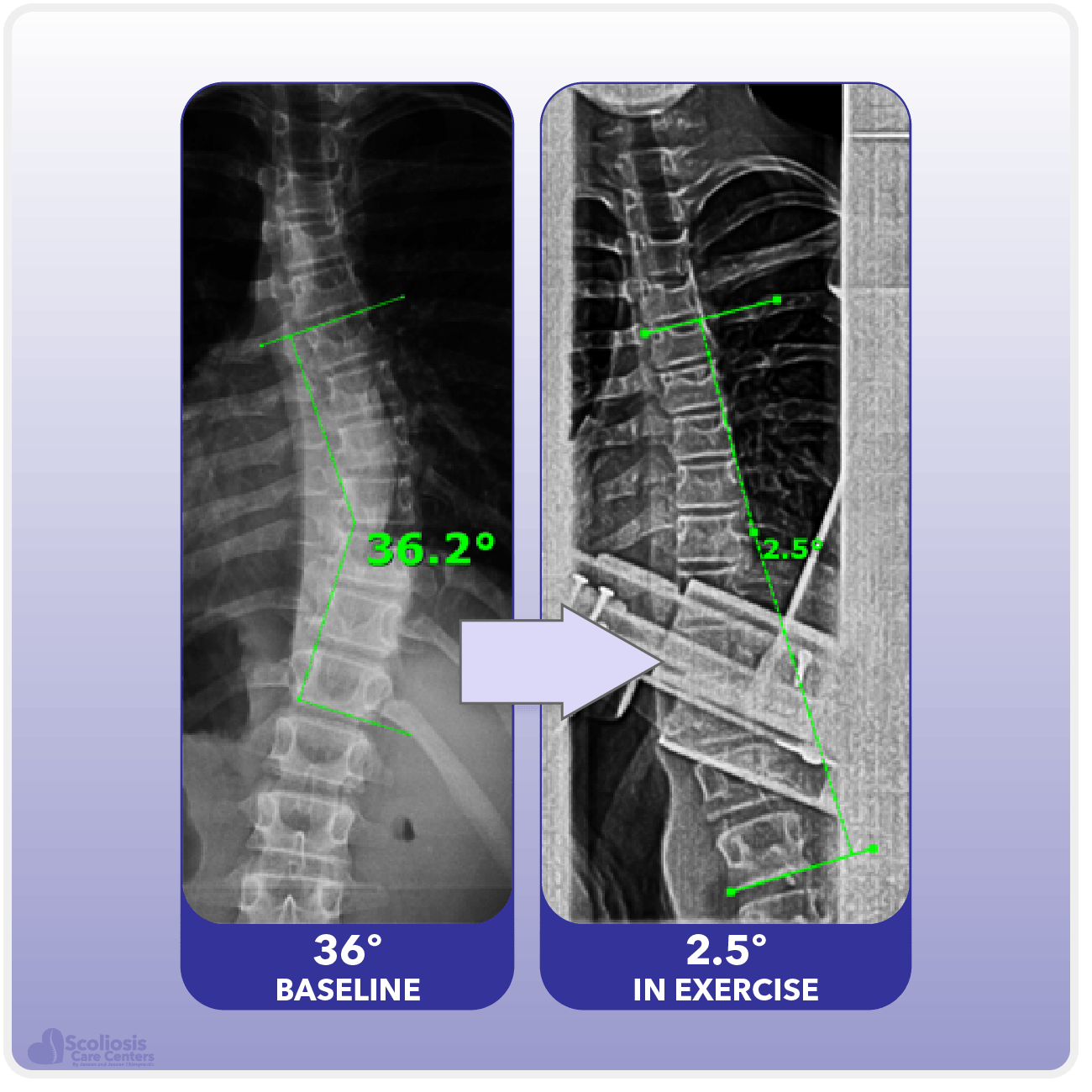
Traditional scoliosis braces often just hold the spine where it is. This method focuses on how straight the spine is in the brace, because in-brace correction predicts long-term outcome.
Strengthen the Spine
Scoliosis-specific exercises support curve correction, strengthen the muscles that support the spine, and help prepare the body for healthy function after bracing.
MRI Guided Treatment
Standing MRI eliminates radiation and allows the spine to be checked more often, making treatment less blind and helping guide every other part of the method.

See Our Results and How Yours Can Last A Lifetime
Explore results pages that show how treatment can improve curve size, posture, rib hump, and long-term outcomes.
Curve Reductions
See examples of curve correction achieved through non-surgical scoliosis treatment.
Rib Hump Reductions
Explore before-and-after outcomes focused on rib hump improvement.
Posture Improvements
See how better spinal alignment can also improve posture and body balance.
How Long Results Last
Learn how long-term non-surgical scoliosis reduction can be maintained.
Learn About The Science Behind The Silicon Valley Method
These supporting educational pages help explain the science of scoliosis progression, nerve tension, treatment timing, and research-backed non-surgical care.
Treating Scoliosis: 12 Things To Know
A deeper educational overview of what parents should understand about scoliosis treatment.
Nerve Tension: How It Affects Scoliosis
Learn why nerve tension may matter in the progression and treatment of scoliosis.
Growth Spurts: How They Worsen Scoliosis
Understand why growth is such a critical period in scoliosis progression and treatment.
Scoliosis Fact Check
Review what research says about common scoliosis claims and misunderstandings.
Want To Learn More?
Knowledge is power, and good information supported by scientific research is key to success. It is for this reason that Scoliosis Care Centers regularly publishes articles addressing common questions about idiopathic scoliosis, its causes, and its treatments with information pulled directly from peer-reviewed scientific publications.
It is always important that your treatment provider bases everything they do on current research so that you can rest easy knowing your treatment is based on real science and evidence.
For example, while chiropractic care may help reduce pain in some cases, there is no evidence that it can fix a scoliosis curve, especially in young growing children.
Research also shows scoliosis has multiple genetic risk factors, including some linked to the nervous system. It remains multifactorial, which is why a complete treatment system matters.
Scientific research has also shown that scoliosis can progress both with and without treatment, including after surgery. With good screening practices and frequent observation of small curves, early intervention can change outcomes dramatically.
If you have additional questions or need information that is not found on these pages, contact us and we will be happy to help.
Ready To Take The Next Step?
Start with the first part of the system and learn how treating the cause of scoliosis can change everything that follows.
Next: Treating the Cause of ScoliosisReferences
- Roth M. Idiopathic scoliosis caused by a short spinal cord. Acta Radiol Diagn (Stockh) 1968;7:257–71.
- Roth M. Neurovertebral and Osteoneural Growth Relations, A concept of normal and pathological development of the skeleton. Univerzita J.E. Purkyne, Brno: Radiodiagnositic Clinic, Medical Faculty, 1985. 101 p.
- Roth M. Morphology and development of the spine: Plea for a doubt. Rivista di Neuroradiologia 1998;11:313–20.
- Roth M. Idiopathic scoliosis from the point of view of the neuroradiologist. Neuroradiology 1981;21:133–8.
- Burwell RG, Clark EM, Dangerfield PH, Moulton A. Adolescent idiopathic scoliosis (AIS): a multifactorial cascade concept for pathogenesis and embryonic origin. Scoliosis Spinal Disord 2016;11:8.
- Mehta MH. Growth as a corrective force in the early treatment of progressive infantile scoliosis. J Bone Joint Surg Br 2005;87:1237–47.
- Weinstein SL, Dolan LA, Wright JG, Dobbs MB. Effects of bracing in adolescents with idiopathic scoliosis. N Engl J Med 2013;369:1512–21.
- Aulisa AG, Guzzanti V, Falciglia F, Galli M, Pizzetti P, Aulisa L. Curve progression after long-term brace treatment in adolescent idiopathic scoliosis, Comparative results between over and under 30 Cobb degrees – SOSORT 2017 award winner. Scoliosis Spinal Disord 2017;12:36.
- Dolan, Lori A.; Weinstein, Stuart L.; Abel, Mark F.; Bosch, Patrick P.; Dobbs, Matthew B.; Farber, Tyler O. et al. (2019): Bracing in Adolescent Idiopathic Scoliosis Trial (BrAIST). Development and Validation of a Prognostic Model in Untreated Adolescent Idiopathic Scoliosis Using the Simplified Skeletal Maturity System. In Spine deformity 7 (6), 890-898.e4.